


ABOUT
The Unist’ot’en village is an Indigenous re-occupation of unceded Wet’suwet’en territory in northern “BC, Canada”.
Defend Indigenous Sovereignty.
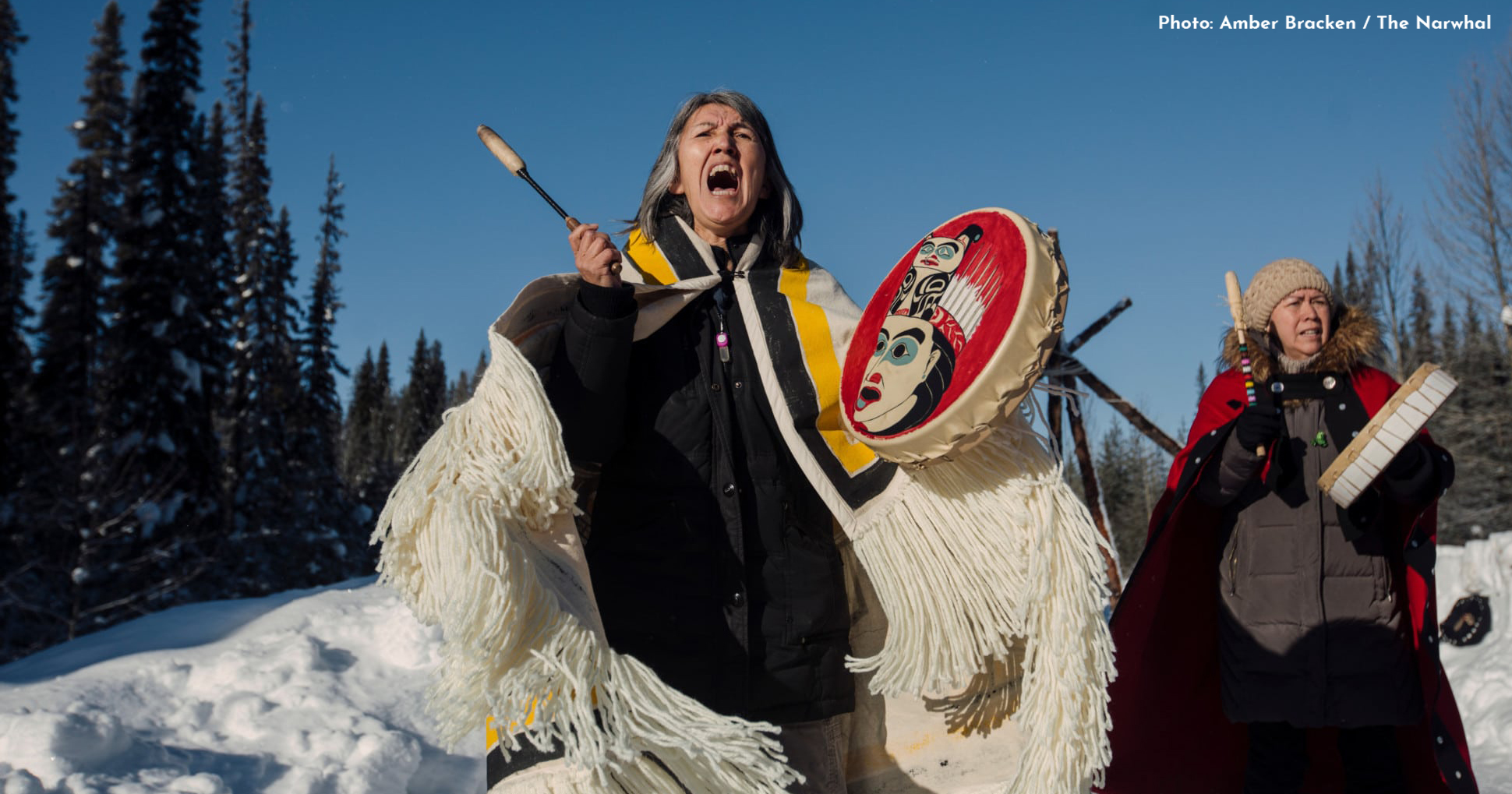
The Unist’ot’en homestead is not a protest or demonstration. Our clan is occupying and using our traditional territory as it has for centuries. Our free prior and informed consent protocol is in place at the entrance of or territory as an expression of our jurisdiction and our inherent right to both give and refuse consent.
Our homestead is a peaceful expression of our connection to our territory. It is also an example of the continuous use and occupation of our territory of our territory by our clan. Our traditional structures of governance continue to dictate the proper use of and access to our lands and water.
Today all of our Wet’suwet’en territory, including Unist’ot’en territory, is unceded Aboriginal territory. Our traditional indigenous legal systems remain intact and continue to govern our people and our lands. We recognize the authority of these systems.
The Wet’suwet’en Hereditary Chiefs have maintained their use and occupancy of their lands and hereditary governance system.
Wet’suwet’en Hereditary Chiefs are the Title Holders and maintain the authority and jurisdiction to make decisions on unceded lands.


The 22,000 square km of Wet’suwet’en Territory is divided into 5 clans and 13 house groups. Each clan within the Wet’suwet’en Nation has full jurisdiction under their law to control access to their territory.
Unist’ot’en – People of the Headwaters. The Unist’ot’en (C’ihlts’ehkhyu / Big Frog Clan) are the original Wet’suwet’en Yintah Wewat Zenli distinct to the lands of the Wet’suwet’en. Over time in Wet’suwet’en History, other clans developed and were included throughout the Territories. The Unist’ot’en territories are not only abundant, but the terrain is known to be very treacherous.
Video explaining Wet’suwet’en governance and why the Hereditary Chiefs oppose pipelines
Press release: Hereditary Leaders from Across BC Stand Behind Wet’suwet’en and the Assertion of Their Traditional Laws.

Background of the Unist’ot’en homestead

Free Prior and Informed Consent
The Free Prior and Informed Consent (FPIC) protocol used by the Unist’ot’en is a request of permission to enter the lands of the traditional chiefs and matriarchs. Visitors are asked to identify themselves and their relationship to the hosts, as our ancestors did. Like a border crossing, the protocol questions make Unist’ot’en land a safe place. FPIC ensures peace and security on the territory.
In ancient times and even today in canoe journeys, and community resistance building gatherings, there exist Protocols where visiting peoples have shown who they are in relation to asking permission to enter the Traditional Lands from the Traditional Chiefs and Matriarchs of the hosting lands.
This is a living breathing assertion of the Traditional Laws of the Wet’suwet’en, which have been asserted via protocols like this on the lands for thousands of years, and renewed by today’s sovereigntists.
Free Prior and Informed Consent is now also written into the United Nations Declaration of the Rights of Indigenous Peoples (UNDRIP).

Legal Background
The Wet’suwet’en fought for many years in the Delgamuukw-Gisday’wa court case to have their sovereignty affirmed by Canadian law. In 1997, the Supreme Court of Canada ruled that the Wet’suwet’en people, as represented by their hereditary leaders, had not given up rights and title to 22,000 square kilometers of Northern British Columbia.

Location and Directions
Follow this link for current location and directions.
The camp is located on a forest road 1200 km (740 mi) by road from “Vancouver, BC” and about 130 km from the town of “Smithers”.
Google Maps plus code 946J5JVP+96.
Unist’ot’en House Group


Historic Wet’suwet’en Use of the Land
These photos, taken around the 1970s, provide a glimpse into the lives of the Wet’suwet’en people using their territory.




Resources
- The Unist’ot’en stand-off: How Canada’s “prove-it” mentality undermines reconciliation.
- Law is on the side of Indigenous group in pipeline dispute, say legal experts.
- The Unist’ot’en Movement, Not the RCMP, Has the Law on Its Side.
- Injunctions: What Land Protectors Need To Know.
- UBC Faculty of Law on Canadian Law on Aboriginal and Treaty Rights.
- Making Space for Indigenous Law.
sign up for our newsletter
We call for solidarity from Indigenous and non-Indigenous communities who uphold Indigenous sovereignty and recognize the urgency of stopping resource extraction projects that threaten the lives of future generations. How can you, as a supporter, show your solidarity with the Wet’suwet’en and Unist’ot’en battle against industry giants? What can you do to stem the tide of colonization and corporate greed usurping Indigenous rights?
STAY UP TO DATE WITH THE LATEST NEWS.
Sign up for quarterly updates from the Unist’ot’en in your inbox.